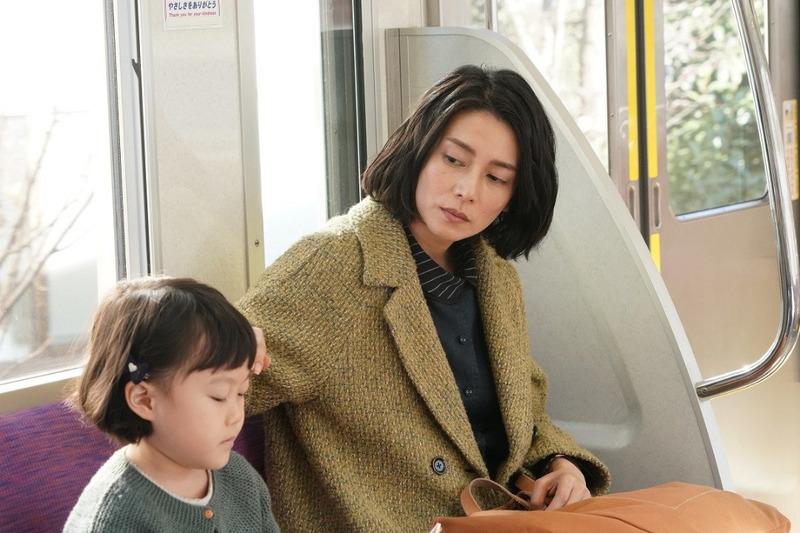
Often heart-wrenching and unfortunately timely, The House on The Slope is a limited series that aims higher than the boundaries of the genre, and creates an unforgettable narrative as a result.
Social dramas with an explicit message or that aim to contribute to public discourse are nothing new; Egyptian TV, for example, has been doing it for as long as TVs (and before that, radios) have been a thing (one notable example thereof from last year is Lam Shamsiya and, before that, China's The Bad Kids - both excellent). It can certainly achieve its goals, but at the same it can also be hammy and quite on the nose, or overtly lecture-y in its tone, and therefore lose audience or appear quite distanced from reality.
The House on The Slope is none of that.
The series follows one main character, Risako, and her experience being a lay judge (similar to a member of a jury) on a case involving a woman killing her 8-month-old in what is described by her defense attorney as a moment of complete loss of autonomy, as a result of intense alienation and "cornering" by everyone and everything around her. Risako, being a mother to a 3-year-old herself, sees herself and her life more and more in the details of the case, and the life she carefully built and convinced herself was where she was happy, begins to unfold around her.
On the sidelines, you see separate stories from other members of the court as well - one of the judges, torn between her career and her gendered role as a mother and a wife, another lay judge, pushed away from his home and made to feel incompetent for his inability to fulfill his (again, gendered) role as a provider, and one who is so desperate to become a mother herself, seemingly to fulfill an image she idealized, rather than what exists in real life.
All those stories converge to question not only gendered roles and expectations for families and individuals, both by society and self-imposed, but also, more prominently, abuse. What does it mean to be abused? What does it "look like" for someone to be an abuser, whether to their child, their partner, or their community around them?
While it can be quite specific in its examples and certain sensibilities to a Japanese setting, the message is universal, with different elements presenting themselves a bit differently in every community and culture. My only main critique for it is that it completely fails to mention Postpartum Depression, beyond a slight nod in one of the early episodes.
Overall, definitely a recommended watch, especially if you are constantly bombarded with content like "Your parenting style sucks; in Japan they have mastered all knowledge and everything is perfect and the solution to every problem you have with your child is to install Tatami mats." Or, you know, you're a normal person with a normal feed and want to learn more before you judge a complicated criminal case that gained a lot of traction worldwide. Whichever.