I have my issues with Amélie Nothomb, the Belgian author whose work this is adapted from. For one, her work on Japan, mostly (semi-)auto-biographical, falls heavily into the territory of Japanese cultural exceptionalism (Nihonjinron) and Orientalist tropes. Second, her oeuvre often deals with the topic of gender with all the nuance you would expect today from a white feminist born in the 1960s, especially one coming from nobility.
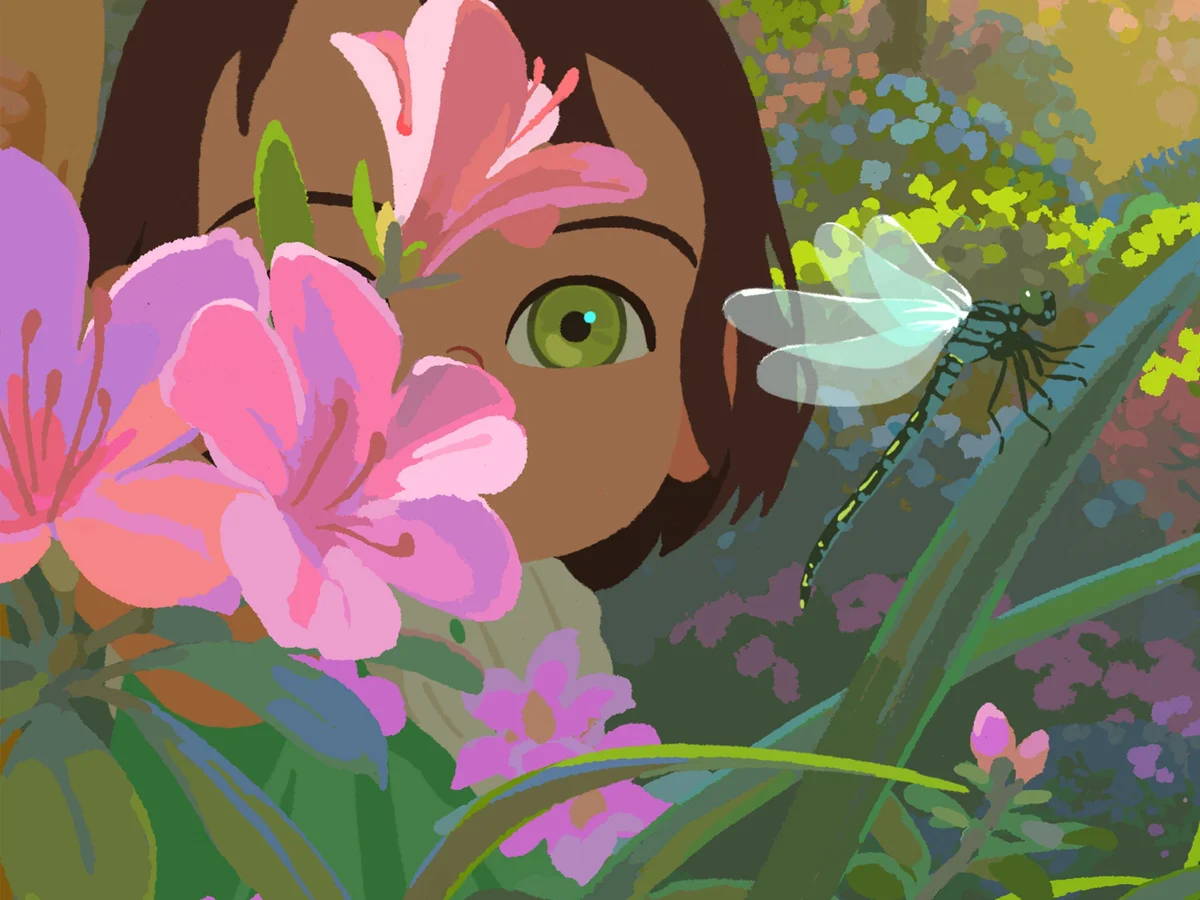
Watching this film detached from the original author, we are presented with a fun film that deals, from the imaginative perspective of a 3 year old toddler, with several formative events in her young life, as well as interesting ideas on self-identity and cognitive/speech development as a third culture child. Some of Nothomb's worst excesses are also toned down. No mention is made, for example, of the simply untrue notion that "the Japanese" believe all children are "little gods" or "okosama" (a polite term used to address someone else's child and commonly used on diner menus for the children's meals).
Yet, the broader Nothomb ideas are still very much present throughout.
The three-year old Amélie is made strongly aware of gender due to her older brother being a little pest. That he is taken to a "boys festival" by their dad is perceived as highly unfair, especially, as the dad confirms, Japan doesn't have a girl's festival.
The existence of the girl's festival Hinamatsuri, one of Japan's most famous celebrations, is conveniently ignored here. That the "boys festival" that is referred to here has formally been known as Children's Day (kodomo no hi), representing all children, since reforms in 1948 is also not addressed.
That is obviously not to say that there are no elements of strong patriarchal society in Japan, but the way that this was presented through a deeply uneducated Western gaze just comes as off.
Halfway through the film, Nishio, the house help working under the landlady, takes Amélie to a nearby river to participate in the Obon festival, and bumps into the landlady. The landlady's cold glare, in response to the two of them together, is meant to instill the idea that Nishio should not get this close to the Western child; that she should not be present at the Obon celebration at all, for she is not Japanese.
Later in the story this is confirmed. Despite having initially introduced Nishio to the diplomat's family precisely to help take care of Amélie, the landlady now berates Nishio for her attachment to Amélie. These two cultures cannot mix. "Do not forget what they did to our country." 'They' implying the West, I assume, despite Belgium being under Nazi occupation during World War II. You know, part of the axis. At least she's making good money of renting her property to the supposed culture that took her husband and child away, I guess.
The landlady is clearly meant to be a representation of Japanese conservatism and xenophobia. She projects her grief on the entirety of the 'West' while seemingly dismissing her nation's active role as imperialist aggressor. So perhaps this hypocrisy is part of the point? She might be based on a real person Nothomb either met as an adult or heard about through her parents or Nishio, after all. But given how superficial the rest of the writing of the film is, I highly doubt she is to be taken at anything more than face value.
(Speaking of which, after Amélie is confronted with an upcoming departure to Belgium and her separation from Nishio, she states that she now understands the landlady's grief? Quite tone-deaf I'd say.)
But again, that is not to say that Japan is particularly known as a pluralistic society, quite on the contrary, even. Not to mention the significant backlash foreign residents (although mostly non-white still) are facing, especially under the current political regime. Yet, the way this film presents this is disgenuine and rooted in misconceptions and Orientalist notions on Japan. A more interesting film could have had, for example, have Amélie confront her parents' dated ideas on Japan and subvert these tropes, but as this is a fairly straightforward adaption still in which Amélie is the direct stand-in for the author, that is too much to ask.
On a final note: one of the final scenes depicts the two awfully neglectful parents gently smiling as they look down on Nishio and Amélie embracing. Note that Nishio is a hired caretaker in her late 30s, approximately the same age as Amélie's mother. It is not that this film in any way draws attention to how infantilizing the parents are towards Nishio in this dynamic (e.g., "aww how cute, our Amélie is bonding with the Japanese"), instead it wholly depicts it as a wholesome conclusion to the story.
At least the animation is nice.