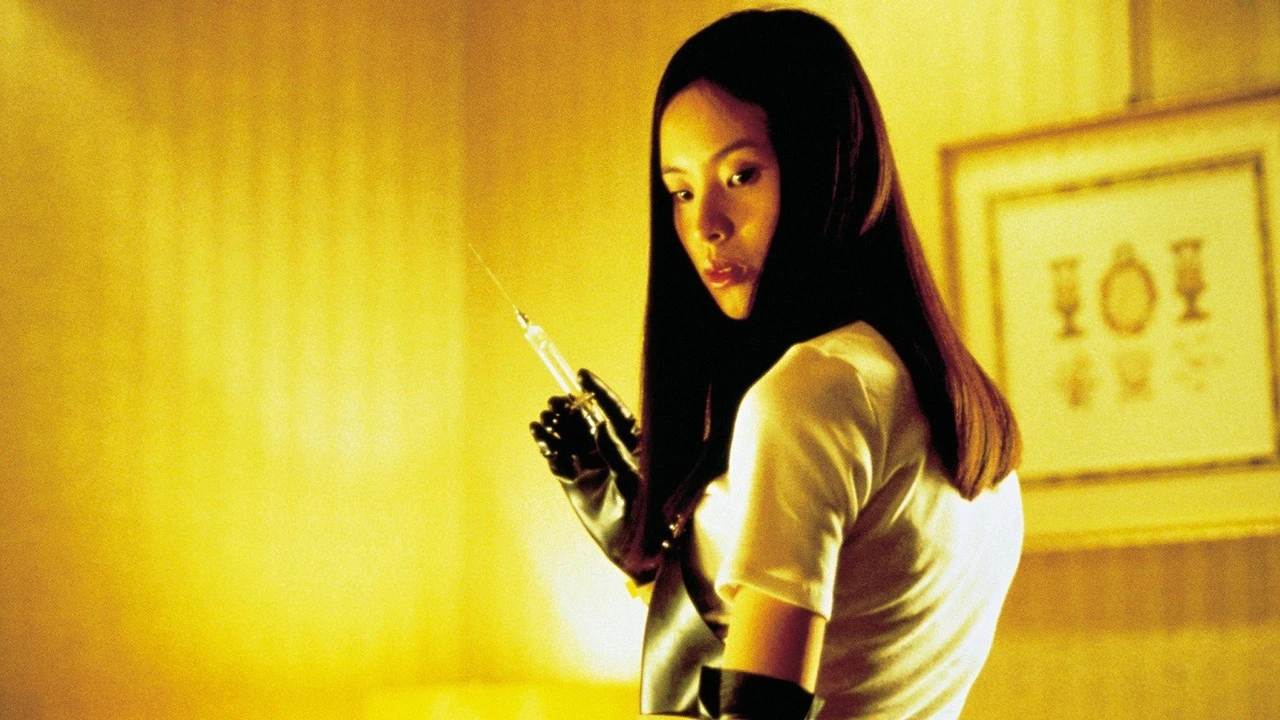
Baffled by the amount of people that take Asami's character and what is depicted at complete face value, whereas what is fiction and what is reality is very clearly deliberately blurred to remain ambiguous.
As a man of his age in late 90s Japan, Shigeharu has a very patriarchal understanding of women and a very specific image of what he seeks in a wife.
Like everything else, the initial scene of Asami waiting for his phone call is a projection of his perception of her, based on the few details he's received throughout conversations. This is made entirely obvious through the cinematic language once we returned to the same set, with Shigeharu discovering what is inside the bag only in his delirious state of mind.
Does he wake up from the nightmare next to her, and return to it upon falling asleep again, or is this itself only a vision induced through his duress? I interpret it as the former, but the ambiguity is intentional and interpretation shouldn't derail from what the film and its source material are actually trying to say: men construct an image of their gendered other through a societally-induced lens that devaluates and infantilizes women, and consequently engage with women only through this lens, constantly readjusting their image into different archetypes based on new information rather than actually listening.