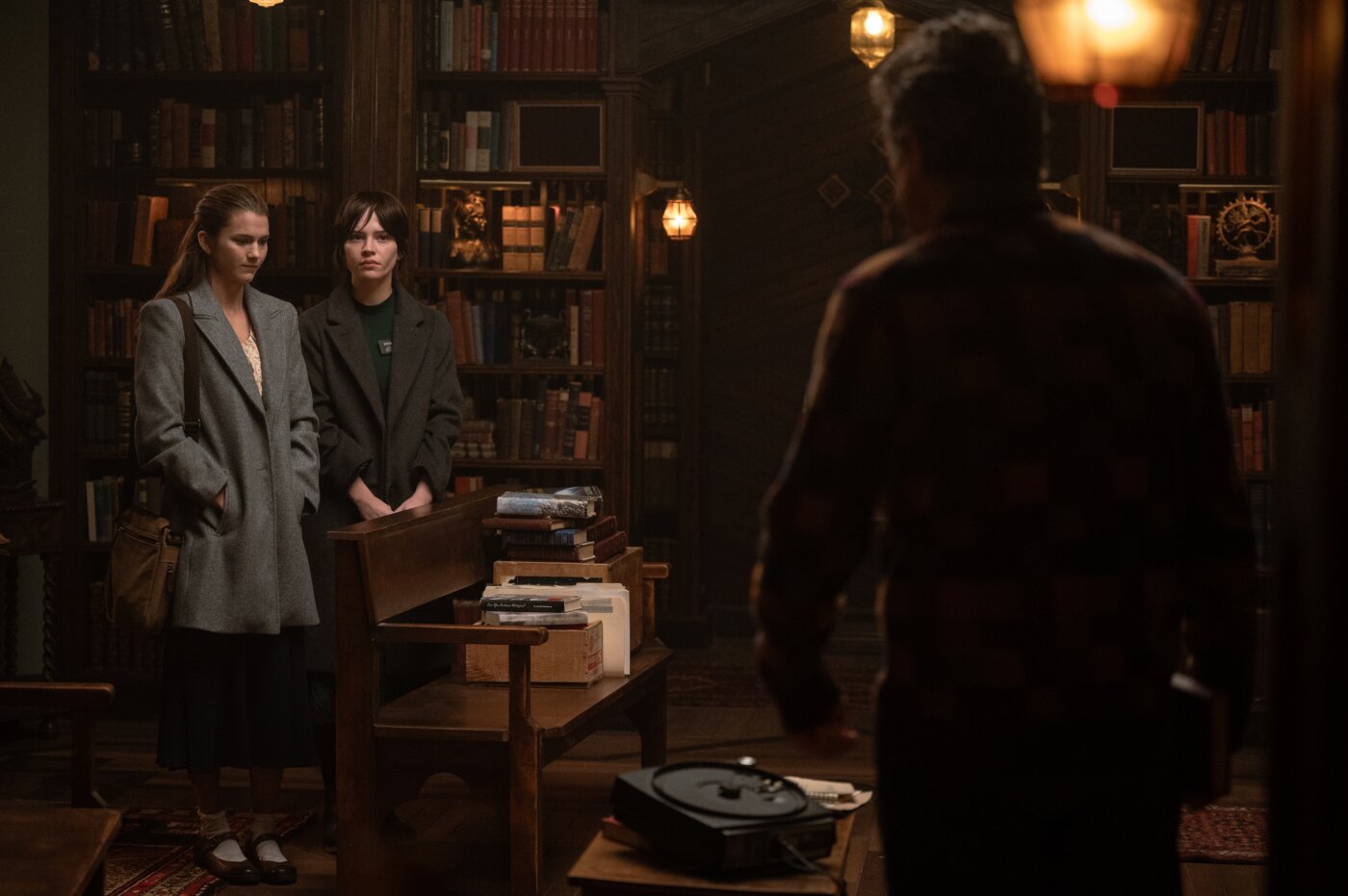
Let's feature Hugh Grant as a charming, manipulative villain in a film that deconstructs religion. Slowly make the main characters question their core beliefs and sanity as they spiral downwards into the web of a reasonably intelligent narcissist hellbent on control of young women but too self obsessed to see the flaws in his actions---slowly giving himself away.
Maybe start by introducing some common ideas in theological studies, similar to how Villeneuve's Arrival introduced linguistic concepts. Talk about the construction of the Bible and mistranslations from Greek and Hebrew in canonical texts. Talk about the historical purpose of religion in politics. Maybe something about oral storytelling. Maybe explore cult dynamics in religious communities. Maybe add a bit of camp; similar to Cage in Longlegs. Or limit the scope altogether and focus more on the aesthetics, like Late Night with the Devil.
No, scratch all of that. Let's go for weak metaphors on 'iteration' and dialog that would have made a smug 14 year old atheist on the Internet proud, and a bunch of pop culture references that feel completely out of place. Let's conclude all of this with a bizarre reveal that leaves no space for suspension of disbelief, and make sure the viewer knows that the writers have heard of Chekhov's gun.
Huh, why do more people listen to Radiohead's Creep instead of The Air That I Breathe by the Hollies? I don't know, why do people watch the Magnificent Seven when they could watch Seven Samurai? You'd think this could lead to a comment about underlying structural similarities (whether in the form of chord progression or narrative) and our innate desire for repetition of recognizable elements? Something about different generations and cultural contexts. Nah, it was yet another clever gotcha that barely lead anywhere.
So much wasted potential here on so many layers too. The doorbell could have been a red herring set up by Grant. The match box could have been empty and gotten picked up by Grant as the two women realize they were bamboozled yet again. Make Grant bend over and stare through the door gap and have the shot POV from the main characters: a nice unsettling homage to the Shining right there.
One of the best shots involves a mannequin of the house but serves no real further narrative purpose. By the time we saw her run through his carefully designed maze the film was essentially almost over and it just lost all meaning.
Honestly, Mike Flanagan did a better job with Midnight Mass in its critique and portrayal of religious community dynamics on a tenth of the budget and prestige of this one.